
The Art of the Professional Follow-Up
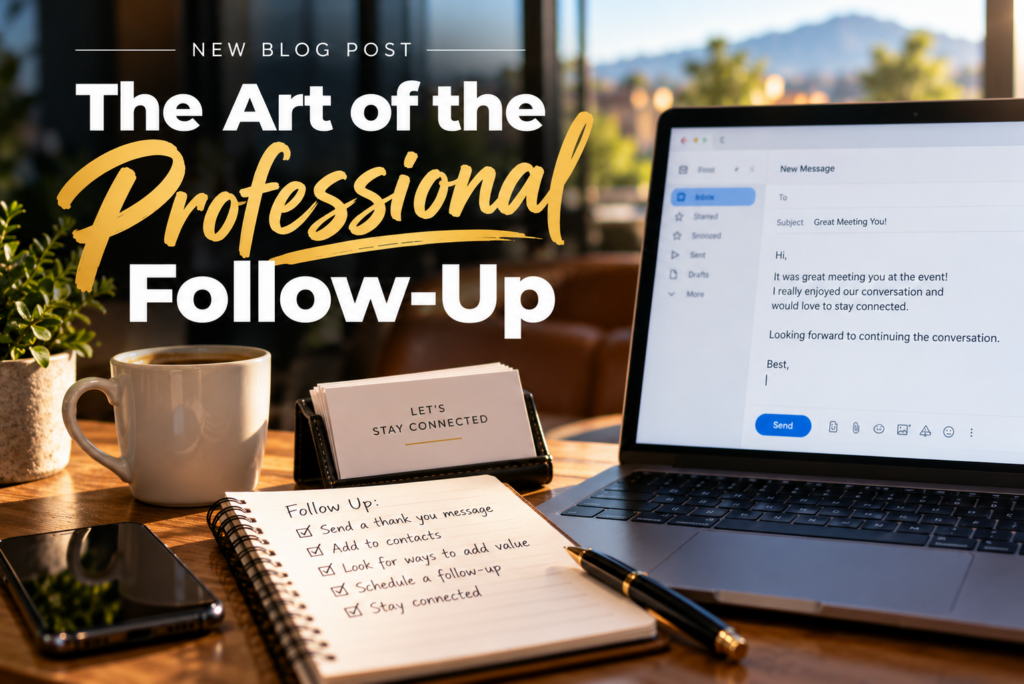
Meeting someone at a networking event is easy. Building a meaningful professional relationship afterward takes a little more effort.
Every day, professionals exchange business cards, connect on LinkedIn, and promise to stay in touch. Unfortunately, many of those connections never develop beyond the initial introduction.
The difference often comes down to one simple action: following up.
A thoughtful professional follow-up can turn a brief conversation into a lasting relationship, a future referral, or a valuable business partnership.
But effective follow-up isn’t about immediately asking for business. It’s about giving the relationship a reason to continue.
Why Professional Follow-Up Matters
Think about the last networking event you attended.
How many people did you meet? How many conversations did you enjoy? And how many of those people have you spoken with since?
Without follow-up, even memorable conversations can quickly fade.
People are busy. They attend meetings, manage businesses, serve customers, and balance countless responsibilities. Even when someone genuinely enjoys meeting you, they may not remember to reconnect.
Following up helps bridge that gap.
It demonstrates that you valued the conversation enough to continue it.
More importantly, it creates another opportunity to learn about each other.
Networking introduces you to people. Following up helps turn those introductions into relationships.
Follow Up While the Conversation Is Fresh
One of the simplest ways to improve your networking follow-up is to avoid waiting too long.
Generally, reaching out within 24 to 48 hours of meeting someone is a useful guideline.
The conversation is still fresh, and the person is more likely to remember who you are.
Your message doesn’t need to be complicated.
For example:
“It was great meeting you yesterday! I enjoyed learning about your business and hearing about the projects you’re working on. Looking forward to staying connected.”
That’s enough to reopen the conversation.
You don’t need to schedule a meeting, offer your services, or ask for a referral immediately.
Sometimes acknowledging the connection is the most appropriate first step.
The important thing is to follow through while the introduction is still meaningful to both people.
Make Your Follow-Up Personal
Generic messages are easy to send, but they’re also easy to forget.
Consider the difference between these two approaches.
Generic follow-up:
“Great meeting you! Let me know if you ever need anything.”
Personalized follow-up:
“I really enjoyed our conversation about your company’s expansion plans. You mentioned you’re looking to connect with more local contractors. I may know a couple of people worth introducing you to.”
The second message demonstrates something important.
You were listening.
Personalized follow-ups don’t require lengthy messages. A single detail from your conversation can make the interaction feel more genuine.
It also provides a natural starting point for continuing the relationship.
This is why paying attention during your initial conversation matters so much.
Instead of simply remembering someone’s name and business, try to remember something meaningful about what they shared.
Focus on Providing Value
One of the biggest mistakes professionals make is treating every follow-up as an opportunity to sell something.
They meet someone, exchange contact information, and immediately send a message promoting their services.
While that approach occasionally works, it can make networking feel transactional.
Instead, consider how you might provide value.
Perhaps you discussed a challenge they’re facing. You might know someone who can help.
Maybe they mentioned an interest in a particular industry. You could share a useful article or resource.
Perhaps you met another professional who would be a great connection for them.
Making that introduction could be more valuable than anything you could sell them.
The strongest professional relationships often begin when someone provides value without expecting an immediate return.
When people recognize that you’re genuinely interested in helping them succeed, future conversations become easier and more natural.
Know When to Suggest a Meeting
Not every connection needs to turn into a coffee meeting.
Sometimes staying connected through occasional messages, professional events, or social media is perfectly appropriate.
However, when you discover a genuine opportunity to collaborate, meeting again can be valuable.
The key is having a purpose.
Instead of saying:
“We should grab coffee sometime.”
Try:
“I enjoyed our conversation about working with small businesses. I think there may be some opportunities for us to collaborate. Would you be interested in meeting for coffee to exchange ideas?”
The second approach gives the other person a reason to consider the invitation.
It also respects their time.
A meeting should create an opportunity to explore something meaningful, not simply become another appointment on someone’s calendar.
Don’t Confuse Following Up With Chasing Someone
There is a difference between maintaining a professional relationship and repeatedly pursuing someone who isn’t interested.
A good follow-up should feel like an invitation, not an obligation.
If someone doesn’t respond immediately, don’t assume they’re ignoring you.
People get busy, messages get buried, and priorities change.
A second message after a reasonable amount of time may be appropriate, particularly if you have something useful to share.
However, repeatedly sending messages without receiving a response can damage the very relationship you’re hoping to build.
Professional follow-up should create opportunities, not pressure.
Respecting someone’s time and boundaries is part of building trust.
Sometimes the best decision is simply to leave the door open for a future conversation.
Create a Simple Follow-Up System
As your professional network grows, remembering every conversation becomes increasingly difficult.
This is where a simple organizational system can help.
You don’t necessarily need complicated software.
A spreadsheet, contact manager, or customer relationship management (CRM) system can help you remember important details.
Consider tracking:
- The person’s name and business
- Where and when you met
- What you discussed
- Potential opportunities to help each other
- When you last communicated
- Any commitments or introductions you promised
These details allow you to reconnect naturally, even months after your original conversation.
For example, if someone mentioned launching a new business location, you might reach out later to ask how the opening went.
That kind of thoughtful communication demonstrates genuine interest.
The purpose of organizing your contacts isn’t to automate relationships. It’s to make sure important connections don’t get forgotten.
Stay Connected Without Always Asking for Something
One of the most valuable networking habits is maintaining relationships when you don’t need anything.
Too often, professionals reconnect only when they’re looking for customers, referrals, or favors.
Instead, find simple ways to stay connected.
Congratulate someone on a business milestone.
Share an article relevant to their industry.
Comment thoughtfully on something they’ve published.
Introduce them to someone who might benefit from knowing them.
Or simply ask how things are going.
These interactions may seem small, but they help relationships develop over time.
When people consistently hear from you without feeling like you’re trying to sell them something, trust has an opportunity to grow.
A strong professional network isn’t built by constantly asking for opportunities. It’s built by consistently creating value for others.
Use Social Media to Strengthen Relationships
Social media can be a useful tool for maintaining professional relationships between in-person interactions.
Connecting with someone on LinkedIn or another professional platform makes it easier to stay informed about their business.
You might see that they’ve launched a new service, celebrated an anniversary, expanded their team, or completed an important project.
Those updates create natural opportunities to reconnect.
However, simply following someone online isn’t the same as maintaining a relationship.
Meaningful engagement matters.
A thoughtful comment, genuine congratulations, or relevant message can be more valuable than repeatedly liking posts without interaction.
Use social media as a way to continue conversations, not replace them entirely.
Remember That Relationships Take Time
Not every follow-up will lead to an immediate opportunity.
You might meet someone today who doesn’t need your services for several years.
Another connection might never become a customer but could introduce you to an important business partner.
Someone else might eventually become a mentor, collaborator, or trusted professional resource.
You cannot always predict how a relationship will develop.
That’s why focusing exclusively on immediate results can limit the value of networking.
Professional relationships often become more valuable through repeated, positive interactions.
The goal isn’t to force an opportunity.
It’s to create an environment where opportunities can develop naturally.
Be Someone Worth Following Up With
Professional follow-up works both ways.
While you’re thinking about how to reconnect with people, consider what makes someone want to reconnect with you.
Were you genuinely interested in the conversation?
Did you listen more than you talked?
Did you offer useful information?
Did you follow through on something you promised?
Did you make the other person feel valued?
These behaviors matter.
When people recognize you as someone who is reliable, helpful, and genuinely interested in others, they’re more likely to initiate conversations themselves.
Eventually, follow-up becomes less about maintaining a contact list and more about participating in an active professional community.
The Real Goal of Following Up
A successful follow-up doesn’t necessarily result in a sale, scheduled meeting, or referral.
Sometimes success simply means someone remembers you.
Other times, it means you’ve learned more about their business, helped solve a problem, or introduced them to someone valuable.
Over time, these interactions build familiarity, trust, and stronger professional relationships.
Networking creates the introduction.
Following up creates the opportunity to continue the relationship.
And consistency gives that relationship room to grow.
The art of the professional follow-up isn’t about finding the perfect message. It’s about showing people that the connection was worth continuing.
Put it into practice this Friday.
Reserve your spot