
Quality vs. Quantity in Professional Networking
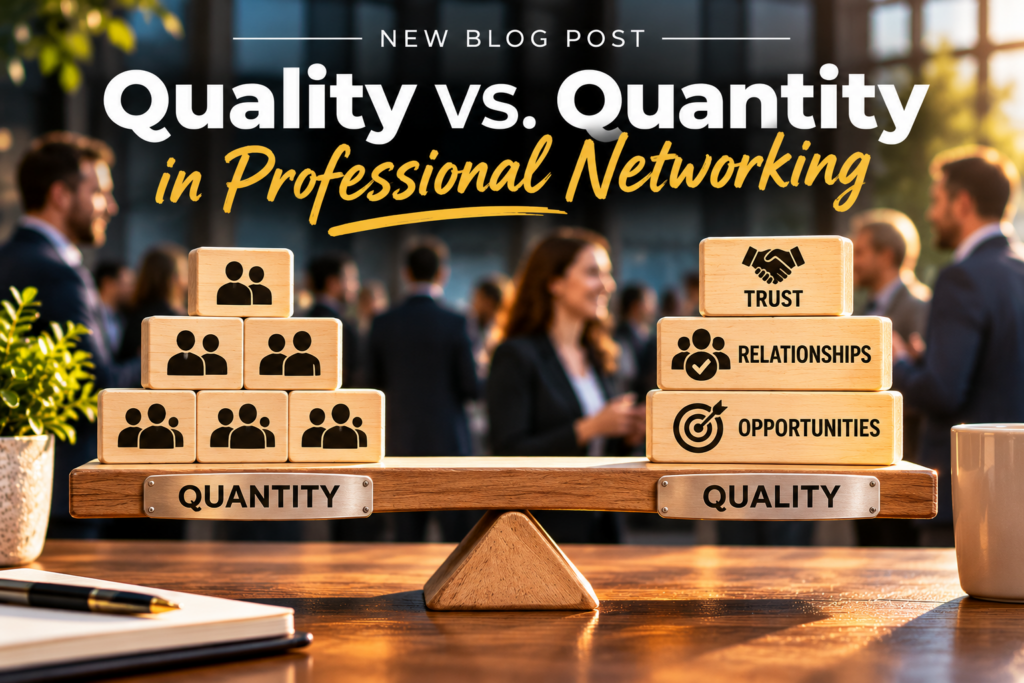
When it comes to professional networking, there’s a common belief that the more people you know, the more successful your network will become.
Attend enough events, collect enough business cards, connect with enough people on LinkedIn, and eventually opportunities will start appearing.
But is having a large professional network really the same as having a valuable one?
Not necessarily.
There’s an important difference between knowing a lot of people and having meaningful professional relationships.
A contact list containing hundreds of names may look impressive, but if you don’t know much about those people, understand what they do, or have any meaningful connection with them, how valuable is that list?
On the other hand, a smaller network of professionals who know, trust, and actively support one another can create opportunities that extend far beyond its size.
The key to successful networking isn’t simply choosing quality over quantity.
It’s understanding how both contribute to building a strong professional network.
What Does Quantity Mean in Professional Networking?
Quantity refers to the number of people within your professional network.
These might include people you’ve met at networking events, colleagues, business owners, customers, industry professionals, and connections you’ve made through social media.
A larger network creates more opportunities for exposure.
Every new connection introduces you to another person, business, industry, or professional community.
That can be valuable.
For example, a real estate professional who regularly meets contractors, lenders, inspectors, insurance agents, and business owners may develop a broader understanding of the services available within their community.
Similarly, a small-business owner who connects with professionals across multiple industries may discover resources and opportunities they wouldn’t otherwise encounter.
The more people you meet, the greater your potential reach becomes.
However, potential reach and actual relationship value aren’t the same thing.
A large network provides opportunities to develop relationships, but those relationships still require effort.
What Does Quality Mean in Professional Networking?
Quality refers to the strength and usefulness of the relationships within your network.
A quality professional connection is someone you know beyond their name and job title.
You understand what they do, who they serve, and what makes their business valuable.
More importantly, you’ve developed enough familiarity and trust to feel comfortable maintaining a relationship with them.
Quality relationships often involve several characteristics:
- Mutual respect and professional trust
- An understanding of each other’s businesses
- Consistent communication
- A willingness to help without expecting immediate returns
- Opportunities for referrals, introductions, and collaboration
Not every relationship needs to include all these characteristics.
Some professional connections may simply provide valuable advice or industry knowledge.
Others may develop into long-term referral partnerships.
What matters is that the relationship offers more than a name in your contact list.
Why Collecting Business Cards Isn’t Enough
Imagine attending a networking event with fifty people.
You introduce yourself to thirty attendees, exchange business cards, and briefly explain what your business does.
By the end of the event, you’ve made thirty new contacts.
That sounds productive.
But consider what happens afterward.
Can you remember what each person does?
Do you know who their ideal customers are?
Would you recognize an opportunity to refer someone to them?
Would they remember enough about you to recommend your services?
If the answer is no, you’ve expanded your contact list without necessarily strengthening your professional network.
Now imagine attending the same event and having five meaningful conversations.
You learn about each person’s business, discuss challenges they’re facing, and discover opportunities to help one another.
You may leave with fewer contacts, but you’ve created stronger foundations for future relationships.
The number of conversations matters less than what those conversations accomplish.
Why a Larger Network Still Matters
It’s easy to conclude that quality is always more important than quantity.
But that oversimplifies professional networking.
You can’t build meaningful relationships with people you’ve never met.
Expanding your network introduces you to new perspectives, industries, opportunities, and professional resources.
It also increases the likelihood of discovering people whose skills and interests complement your own.
For example, someone working in marketing may primarily interact with other marketing professionals.
By expanding their network to include accountants, contractors, Realtors, business consultants, and financial professionals, they gain exposure to different business challenges and opportunities.
Some of those connections may never develop into close professional relationships.
Others could become extremely valuable.
Quantity creates opportunities for discovery. Quality determines what happens after the introduction.
Both have a role.
The Difference Between Contacts and Connections
A contact is someone whose information you have.
A connection is someone with whom you’ve established some level of familiarity.
A professional relationship develops when that familiarity grows into mutual understanding and trust.
Consider these three stages:
Contact: You meet someone, exchange information, and learn their name.
Connection: You interact again, remember previous conversations, and begin understanding each other’s work.
Relationship: You develop trust, recognize opportunities to help one another, and maintain communication over time.
Not every contact needs to become a close professional relationship.
That would be unrealistic.
However, understanding these stages helps you recognize that networking doesn’t end when someone hands you a business card.
That’s where the opportunity begins.
Focus on Meaningful Conversations
One of the easiest ways to improve the quality of your network is to change how you approach conversations.
Instead of trying to meet everyone in the room, focus on understanding the people you’re speaking with.
Ask questions that go beyond job titles.
What types of customers do they typically serve?
What challenges are they encountering?
What makes their company different?
What kinds of professionals do they enjoy working with?
What opportunities are they hoping to create?
These questions provide valuable context.
They also demonstrate genuine interest.
When someone feels heard and understood, the conversation becomes more memorable.
And memorable conversations create better opportunities for future connections.
Follow-Up Turns Quantity Into Quality
Meeting people expands your network.
Following up strengthens it.
Without follow-up, many professional introductions remain little more than brief encounters.
A thoughtful message after an event can begin changing that.
Reference something you discussed.
Share a useful resource.
Make an introduction you promised.
Or simply let someone know you enjoyed meeting them.
Over time, repeated interactions create familiarity.
Familiarity creates opportunities to understand each other’s businesses.
And consistent positive experiences can develop into trust.
This is how a large collection of contacts gradually becomes a meaningful professional network.
Build a Network That Includes Different Perspectives
A valuable network doesn’t necessarily consist of people who do the same work you do.
In fact, connecting with professionals from different industries can create opportunities that wouldn’t exist within a narrow professional circle.
A contractor may benefit from knowing Realtors, designers, lenders, and insurance professionals.
A business consultant may find value in relationships with accountants, attorneys, marketers, and technology providers.
An entrepreneur may benefit from knowing experienced business owners, community leaders, and professionals who understand challenges outside their own industry.
Diversity of professional experience expands the resources available within a network.
It also makes you a more valuable connector.
When someone needs help with something outside your expertise, you may know exactly who they should meet.
Don’t Measure Networking Success Only by Numbers
Numbers can be useful when evaluating networking activity.
You might track how many events you attend, how many people you meet, or how many new contacts you make.
Those measurements can help you understand your level of participation.
But they don’t tell the entire story.
Consider also measuring the quality of your interactions.
How many meaningful conversations did you have?
How many people did you follow up with?
How many introductions did you make?
Did you help someone solve a problem?
Did you strengthen an existing relationship?
Did you discover an opportunity to collaborate?
These questions help measure what networking is actually accomplishing.
A successful networking event isn’t necessarily the one where you meet the most people. It’s the one where you create the most meaningful opportunities for connection.
Become a Connector Within Your Network
One of the most valuable things you can do with a professional network is help other people connect.
This requires both quantity and quality.
A broad network gives you access to professionals across different industries.
Meaningful relationships help you understand which people might benefit from knowing one another.
For example, you may meet a business owner who needs help developing a website.
Because you’ve built a relationship with a web designer, you know someone who could be a good fit.
You make the introduction.
Now you’ve provided value to two people without selling anything.
As you continue making thoughtful introductions, you become known as someone who contributes to the professional community.
That’s a powerful reputation to develop.
Consistency Builds Stronger Relationships
Professional relationships rarely develop after a single meeting.
People need opportunities to interact repeatedly.
This is why consistent participation in networking groups, professional organizations, and community activities can be so valuable.
When you regularly encounter the same people, conversations naturally become more meaningful.
Instead of repeatedly introducing yourself, you begin discussing ongoing projects, business developments, and shared interests.
You learn more about each other’s work.
You begin recognizing opportunities to collaborate.
And eventually, people may feel comfortable recommending one another.
Consistency transforms unfamiliar faces into familiar professionals and familiar professionals into trusted relationships.
Find the Right Balance
The goal of professional networking shouldn’t be to build the largest contact list possible.
It also shouldn’t be to limit yourself to a small group of familiar people.
A strong network needs both growth and depth.
Continue meeting new professionals.
Explore different industries.
Attend events where you can encounter new perspectives.
But also invest time in the relationships you’ve already started.
Follow up.
Stay connected.
Make introductions.
Support other professionals.
And give meaningful relationships time to develop.
Think of quantity as expanding the possibilities within your network and quality as developing those possibilities into something valuable.
Build a Network That Works Beyond the Room
The true value of networking isn’t measured by how many people recognize you when you walk into an event.
It’s measured by the relationships that continue beyond that room.
A strong professional network includes people who understand what you do, recognize your strengths, trust your professionalism, and know when they should connect you with someone else.
It also includes people you understand well enough to support in return.
Building that kind of network requires curiosity, consistency, communication, and a willingness to help others.
So the next time you attend a networking event, don’t worry about collecting the most business cards.
Meet new people.
Have meaningful conversations.
Follow up with the connections worth developing.
And continue strengthening the relationships you’ve already built.
Because successful networking isn’t simply about knowing more people.
It’s about knowing more people well enough to create opportunities, build trust, and help one another succeed.
Put it into practice this Friday.
Reserve your spot